Traveling with a cat can be challenging. Cats are creatures of habit, and even small changes in routine or environment can cause stress. However, with proper preparation, cat travel can be safe, comfortable, and even enjoyable for both you and your feline companion.
This complete guide explains how to prepare your cat, reduce stress, ensure safety, choose the right type of travel, and pack everything you need for a smooth journey.
Preparing for Cat Travel
Preparation is the foundation of successful cat travel. One of the most important steps is choosing the right carrier. A sturdy, well-ventilated carrier that allows your cat to stand, turn, and lie comfortably is essential. Ideally, choose one with a top opening and secure locks.
Start familiarizing your cat with the carrier days or weeks before the trip. Place soft bedding, treats, and toys inside and leave the door open. Allow your cat to explore freely without pressure. Positive association dramatically reduces anxiety once travel day arrives.
A veterinary check-up is recommended before any long trip. Ensure vaccinations are current, review health concerns, and discuss anxiety or motion sickness with your veterinarian. Some cats benefit from calming aids or, in severe cases, prescription medication.
Finally, ensure your cat has proper identification—a microchip, ID tag, and an updated contact number. This protects your cat in case of accidental escape.
Reducing Stress During Cat Travel
Cats are sensitive to unfamiliar environments, so reducing stress should be a priority during travel.
- Cover the carrier with a light blanket to block visual stimuli.
- Speak softly and maintain a calm atmosphere.
- Play gentle, soothing music during the trip.
- Keep the environment quiet and stable, avoiding sudden movements.
Avoid feeding your cat right before travel to reduce the risk of nausea. Offer small amounts of water and plan hydration breaks during long car trips. For flights, check airline guidelines on feeding times.
Bringing familiar items—your cat’s blanket, toys, or a piece of your clothing—provides comfort through scent and helps your cat feel secure.
Understanding and Preventing Motion Sickness
Many cats experience motion sickness, especially during car travel. Signs include:
- Excessive drooling
- Nausea or vomiting
- Panting
- Restlessness
- Meowing intensely
If your cat shows these signs, speak to your vet about:
- Anti-nausea medications
- Prescription calming aids
- Adjusting feeding times
- Carrier positioning (front-facing and stable)
Preventing motion sickness can completely transform your cat’s travel experience.
Safety Measures for Cat Travel
Safety must always come first.
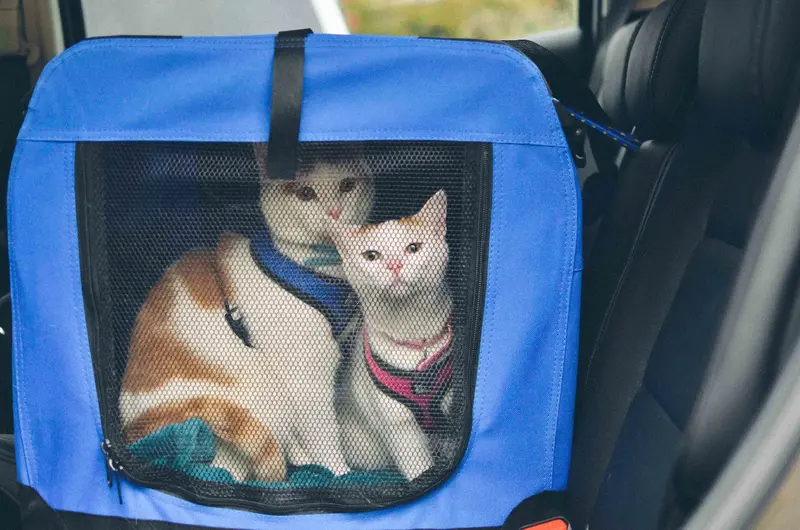
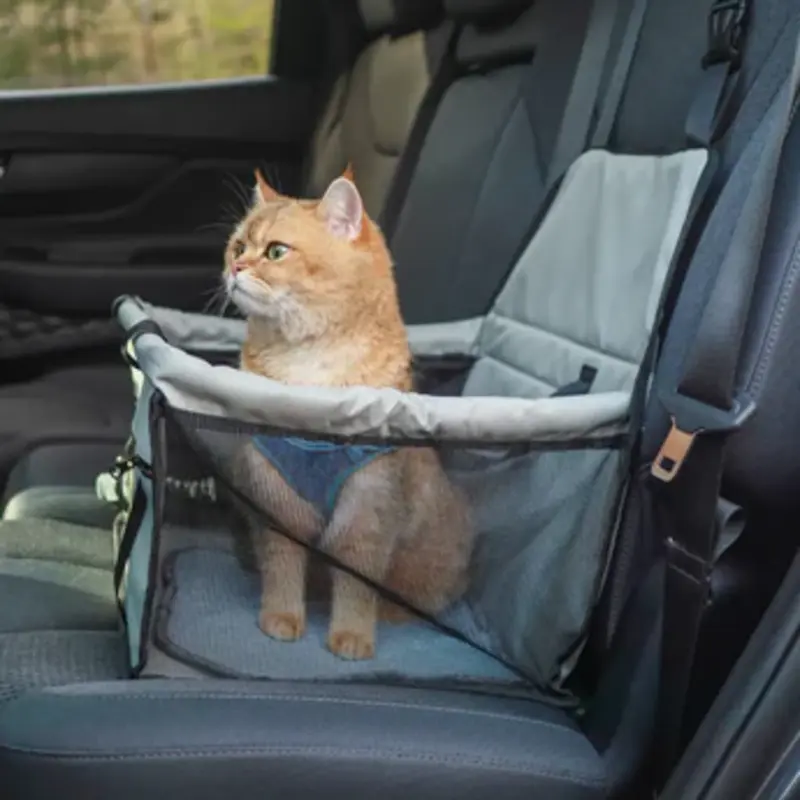
- Secure the carrier with a seatbelt or harness.
- Never allow your cat to roam loose in a moving vehicle.
- Keep the temperature comfortable and avoid direct sunlight.
- Ensure proper ventilation.
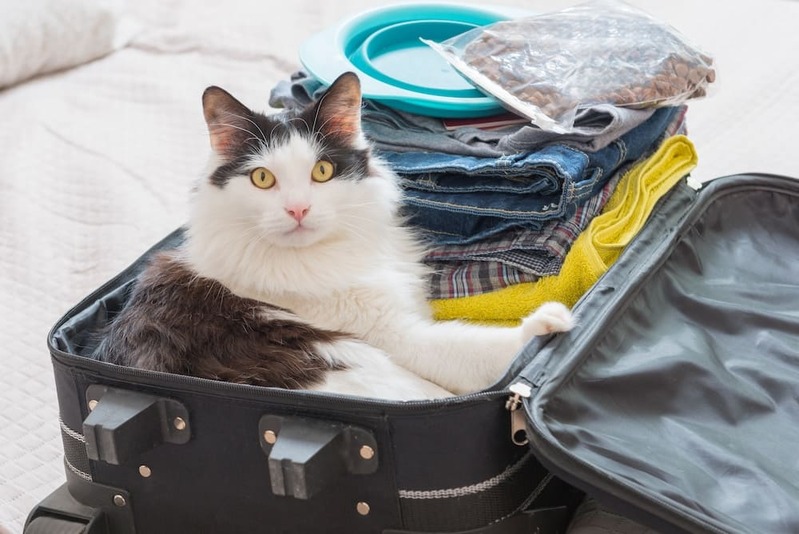
- Bring a well-stocked travel kit, including:
- Food and water
- Collapsible bowls
- Portable litter box + litter
- Waste bags and wipes
- Medications
- First-aid essentials
- Cleaning supplies
Being prepared reduces stress for both you and your cat.
Types of Cat Travel: Car, Plane, Train & More
1. Car Travel
Car travel is the most common. Always secure the carrier and avoid loud music or sudden movements. Plan for hydration breaks during long trips. Never leave your cat in a parked car.
2. Air Travel
Air travel requires extra planning.
- Review airline rules for carrier size, documentation, and fees.
- Whenever possible, keep your cat in the cabin—it is safer and far less stressful than cargo.
- Choose direct flights to shorten travel time.
- Bring familiar items inside the carrier for comfort.
Cargo travel should only be used when absolutely necessary.
3. Train Travel
Many trains allow cats in carriers. Trains can be noisier, so cover the carrier and choose a quieter seat if possible.
4. Bus, Taxi, or Rideshare
Policies vary. Always keep your cat secured and minimize movement. For short rides, anxiety can be managed with pheromone sprays or calming items.
Calming Aids for Anxious Cats
Some cats become extremely stressed during travel. Helpful aids include:
- Feline pheromone sprays (such as Feliway)
- Calming collars
- Vet-approved natural supplements (e.g., L-theanine, tryptophan, valerian)
- Prescription sedatives (only under veterinary guidance)
- Carrier training and positive reinforcement
Avoid over-the-counter sedatives not recommended by vets, as some can be dangerous for cats.
International Cat Travel Requirements
For international travel, research regulations months in advance. Requirements often include:
- Microchip identification
- Rabies vaccination
- Health certificate issued by a veterinarian
- Import permits
- Possible quarantine depending on destination
Each country has its own rules, so always verify official regulations before booking travel.
Comfort During Cat Travel
Comfort is just as important as safety.
- Provide soft bedding and ensure the carrier fits your cat’s size.
- Avoid feeding immediately before departure.
- Offer water during breaks.
- Use familiar scents to create reassurance.
- Schedule breaks so your cat can stretch or use a portable litter box on very long trips.
Small adjustments make a big difference.
Traveling with Senior Cats or Cats with Medical Conditions
Older cats or those with health issues need additional care.
- Bring medications and follow schedules strictly.
- Provide extra padding for arthritic cats.
- Keep temperature stable—the elderly are more sensitive to heat and cold.
- Ensure frequent hydration breaks.
- Consult your vet before traveling long distances or flying.
In some cases, travel may not be recommended. A pet sitter or boarding facility may be a safer choice.
Tips for First-Time Cat Travelers
For cats who have never traveled:
- Start with short practice trips.
- Gradually increase the duration as your cat becomes more confident.
- Reward calm behavior with treats and praise.
- Track your cat’s reactions to adjust future travel plans.
Monitoring Your Cat’s Behavior
Watch for signs of stress or discomfort:
- Excessive meowing
- Panting or drooling
- Attempting to escape the carrier
- Restlessness or trembling
Calm reassurance can help, but avoid forcing interactions, which may worsen anxiety. Recognizing early signs ensures a safer and more comfortable journey.
Setting Up a Cat-Friendly Hotel Room
If you are staying overnight:
- Immediately inspect the room for hazards.
- Create a safe zone with your cat’s carrier, bedding, and food.
- Keep your cat inside the carrier while you set up the room.
- Block off hiding spots that are unsafe or hard to reach.
This reduces escape risks and helps your cat adjust quickly.
Quick Cat Travel Checklist
Before You Leave
✔ Vet check-up
✔ Vaccinations and documents
✔ Carrier training
✔ Pack essentials
✔ Update ID and microchip
✔ Confirm travel rules (airline, train, hotel)
During Travel
✔ Secure carrier
✔ Maintain calm environment
✔ Offer water during breaks
✔ Monitor behavior
✔ Keep ventilation and temperature safe
After Arrival
✔ Set up safe room
✔ Offer food and water
✔ Allow slow exploration
✔ Maintain familiar routines
Conclusion
Cat travel doesn’t have to be overwhelming. With proper preparation, stress-reducing techniques, and safety precautions, traveling with your cat can be smooth and comfortable. Bringing familiar items, planning breaks, choosing the right carrier, and following veterinary guidance can transform the experience completely.
By planning ahead and prioritizing your cat’s needs, you ensure every journey is a positive, safe, and peaceful experience for both you and your feline companion.