
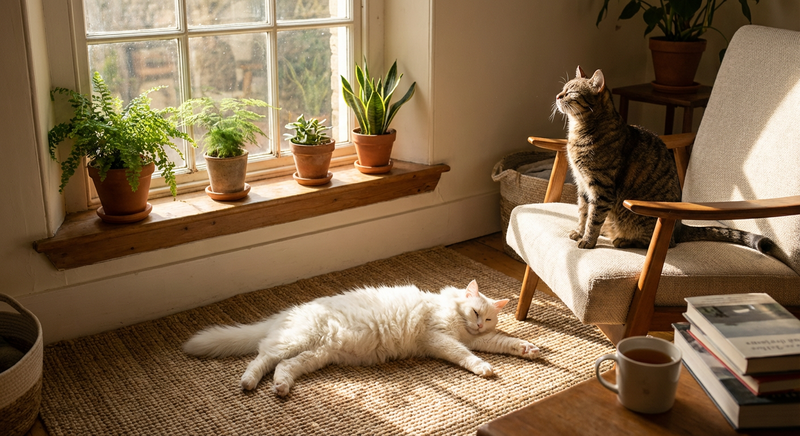
Indoor cats spend most of their lives inside the home, which means their environment plays a major role in shaping their physical health, emotional well-being, and daily rhythms. One of the most important — yet often overlooked — environmental factors is light. Sunlight, natural brightness, and even artificial light influence a cat’s mood, sleep pattern, energy level, hormone regulation, and overall comfort. While sunshine can be incredibly beneficial, too much exposure or poorly managed indoor lighting can also create risks. Understanding the right balance helps maintain a safe, healthy indoor life for your cat.
Below is a detailed guide to the benefits, risks, and best practices for providing appropriate light and shade for indoor cats.
The Benefits of Sunlight for Indoor Cats
1. Mood Enhancement and Relaxation
Cats instinctively seek out warm, bright patches of sunlight because natural light triggers the release of serotonin, the “feel-good” hormone. When a cat basks in the sun, it often appears more relaxed, calm, and content. This natural boost in mood helps indoor cats cope with boredom, reduces anxiety, and stabilizes emotional behavior. Even older or shy cats feel more secure when they have sunny spots to rest in.
2. Support for Healthy Sleep Cycles
Like humans, cats have internal biological clocks regulated by light. Exposure to natural daylight helps reinforce a healthy sleep-wake cycle, encouraging cats to remain active during the day and rest at night. Indoor cats living in dim or artificially lit spaces may develop irregular sleeping habits, nighttime zoomies, or daytime lethargy. Allowing your cat access to windows and daytime brightness supports their natural rhythms.
3. Gentle Warmth for Joints and Muscles
Sunlight provides warmth that helps soothe stiff muscles and joints. This is especially helpful for older cats, cats with arthritis, or cats recovering from injury. Warm sunspots relax the body, improve blood circulation, and ease tension — which is why senior cats often gravitate toward bright windowsills.
4. Visual Stimulation and Environmental Enrichment
Sunlit windows give indoor cats a view of outdoor activity — birds, passing shadows, moving leaves — which keeps their minds active and sharp. Brightness makes their environment more engaging and reduces the risk of depression, frustration, or destructive behavior. Light creates natural enrichment without needing toys or gadgets.
The Risks of Sun Exposure for Indoor Cats
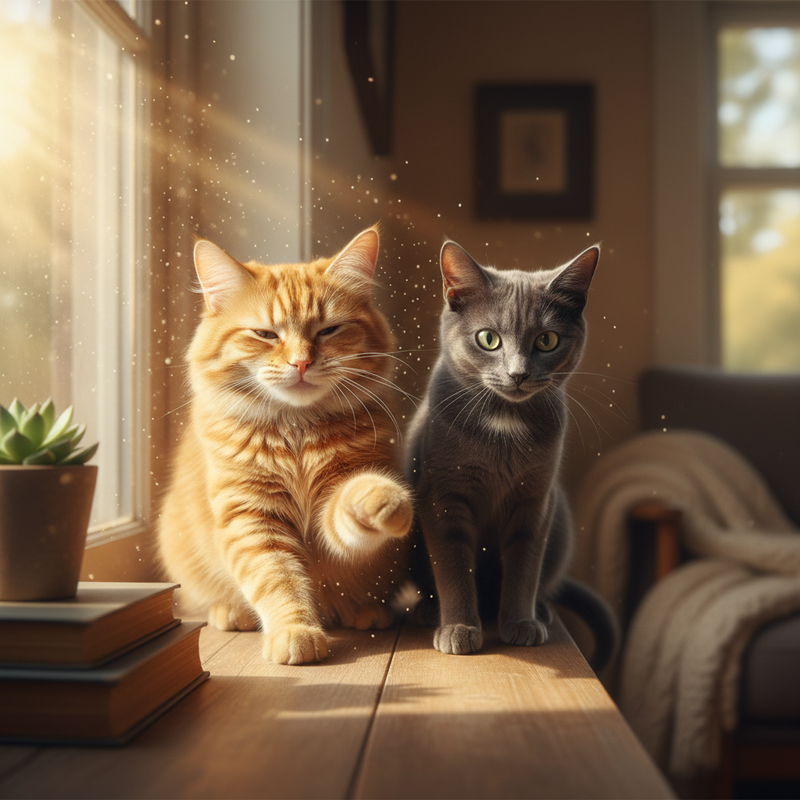
While sunlight has clear benefits, unmanaged exposure can create several risks. These dangers are often underestimated, especially for indoor cats that spend long hours sleeping in one sunny location.
1. Sunburn and Skin Damage
Cats with white coats, thin fur, or pink skin around the nose and ears are particularly prone to sunburn. The tips of the ears, eyelids, and nose can become irritated or burned from prolonged exposure. Over time, this can increase the risk of certain skin cancers.
Even indoor UV exposure can cause harm when a cat sits in direct sunlight for hours at a time.
2. Overheating and Dehydration
Cats regulate their temperature efficiently, but sleeping in intense sunlight can cause mild overheating or dehydration, especially during summer. Indoor environments can trap heat, and cats may not move from a comfortable spot until they become too warm. Signs of overheating include panting, drooling, lethargy, or excessive grooming.
3. Eye Sensitivity and Strain
Too much bright, direct sunlight can irritate sensitive feline eyes. Cats with light-colored eyes or eye conditions may squint, avoid bright areas, or show signs of discomfort after long sun exposure. Over time, harsh glare can contribute to irritation and stress.
4. Disrupted Behavior from Excessive Heat Seeking
Some cats overly rely on sun warmth instead of moving around or engaging in activity. Spending too much time in hot sunspots may lead to lethargy, reduced playfulness, or excessive sleeping — especially in overweight cats or elderly cats that already have low activity levels.
Balancing Light and Shade in a Multi-Room Home
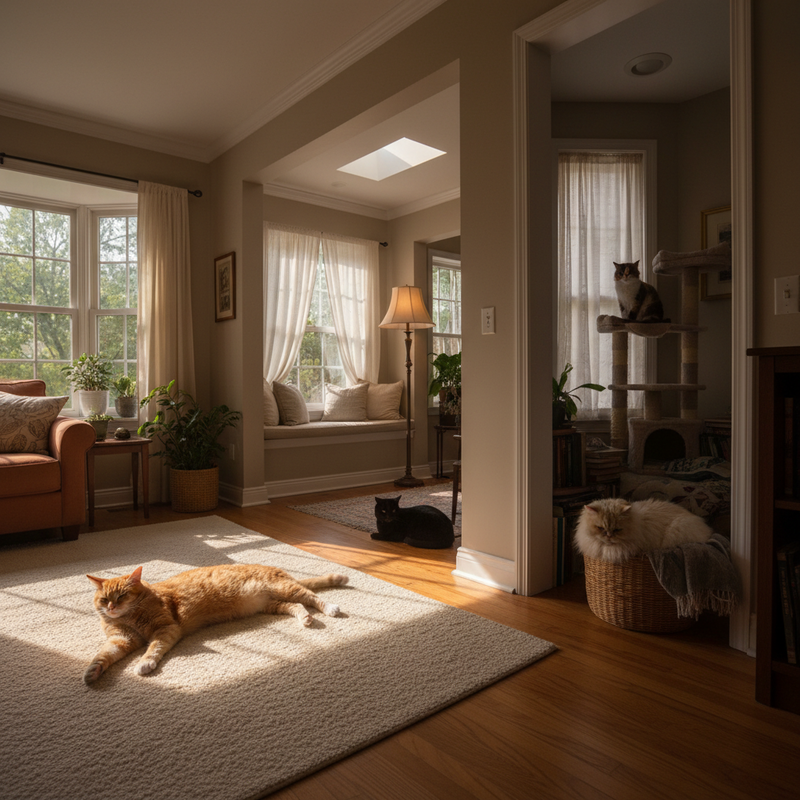
Creating the right lighting environment for indoor cats is about providing choice. Cats thrive when they can decide where to rest, hide, watch, and sleep. Here are ways to create a healthy balance:
- Offer Multiple Sunlight Zones for Indoor Cats
Place cat beds, shelves, and window perches in areas that receive indirect or filtered sunlight. This allows cats to enjoy warmth without the risk of overheating. Rotating sunspots throughout the day naturally encourages moderate exposure.
- Provide Shaded, Cool Alternatives
If a room gets too warm, ensure there are shaded areas:
- Cat tunnels
- Curtains or blinds
- Cool tile floors
- Elevated platforms away from the window
Cats will move between warm and cool areas as needed.
- Use Sheer Curtains to Filter Intense Rays
Sheer curtains reduce UV intensity while still letting natural light brighten the space. This prevents sunburn, protects furniture, and keeps temperatures comfortable without taking away your cat’s favorite sunny spot.
- Maintain Hydration During Sunny Days
Make sure fresh water is always available near sunny windows, especially in summer. Cats that nap in warm places benefit from easy access to hydration.
Artificial Light: Its Impact on Indoor Cats
1. Maintaining Day-Night Cycles for Indoor Cats
If your home stays dark during the day — such as in winter or rooms with few windows — artificial lighting helps maintain healthy circadian rhythms. Bright, warm artificial light during daytime hours mimics natural conditions and prevents cats from becoming sluggish or confused.
2. Avoiding Harsh, Constant Lighting
Cats dislike constant bright artificial lighting. Very intense LED lights or flickering bulbs can stress feline eyes. Use soft, warm lighting in the evening and avoid leaving bright lights on all night. A dim, calming environment encourages restful sleep.
3. Creating Visual Interest with Gentle Lighting
Nightlights or low ambient lighting can help older cats navigate the home safely at night. Low-light environments also mimic natural crepuscular conditions — dawn and dusk — when cats are naturally most active.
How to Protect Indoor Cats from Sunlight Risks
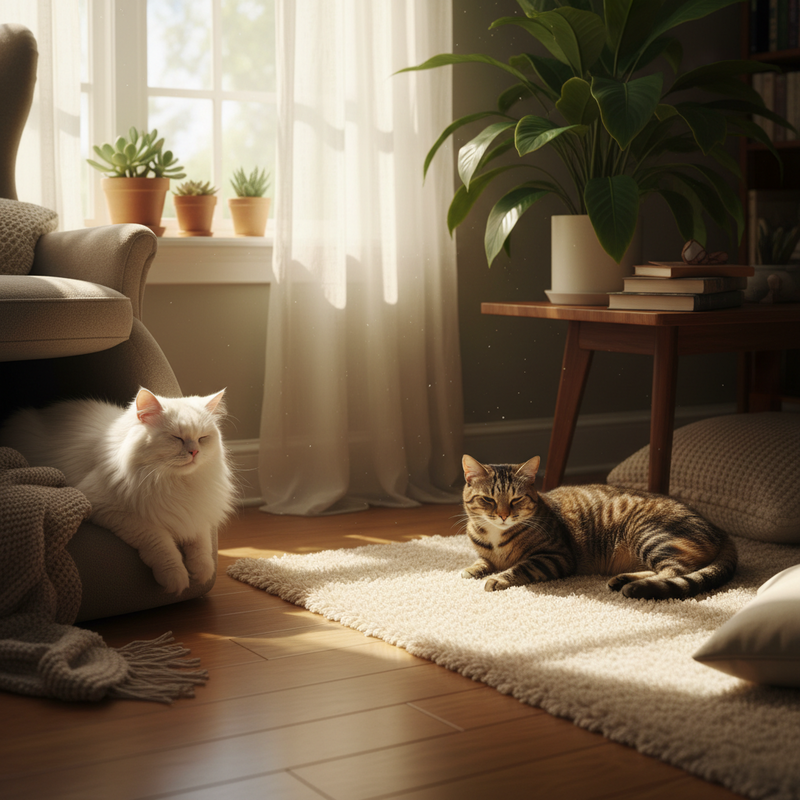
1. Limit Direct Sun Exposure During Peak Hours
Between 11 a.m. and 4 p.m., UV rays are strongest. During these hours, use blinds or curtains to reduce intensity if your cat loves sitting near a sunny window.
2. Provide Soft, Breathable Sleeping Spots
Beds made from breathable fabrics prevent overheating. Avoid placing plush or fuzzy beds directly under intense sunlight during summer months.
3. Use Cat-Safe Sunscreen When Necessary
For cats with pink noses or thin coats, a veterinarian-approved, pet-safe sunscreen can help prevent burns. Human sunscreen is unsafe for cats — always use products made specifically for animals.
4. Check Skin and Ears Regularly in Indoor Cats
Look for redness, soreness, flakes, or scabbing on:
- Ear tips
- Nose
- Eyelids
- Belly (for hairless breeds)
Early intervention prevents larger health issues.
Sunlight and Special Cat Groups
- Senior Cats
Older cats benefit from sun warmth for joint comfort, but they must be monitored closely because they can overheat more easily. Provide warm spots, but also ensure shaded options and easy access to cool areas.
- Hairless Breeds
Breeds like Sphynx cats are extremely sensitive to sunlight. They require filtered light only and must avoid direct sun exposure to prevent burns.
- Kittens
Young cats are curious and may fall asleep in unsafe hot spots without realizing the heat risk. Create safe boundaries around large sunny windows in summer.
Creating the Ideal Light Environment for Indoor Cats
To achieve a gentle, healthy lighting setup:
- Allow morning sunlight, which is softer and safer.
- Use filtered or indirect light during peak hours.
- Maintain predictable light cycles: bright in the day, dim in the evening.
- Place window perches at angles that avoid full, harsh sun.
- Provide cooling pads during warm seasons.
- Rotate cat beds according to seasonal light patterns.
This environment gives your cat natural comfort, stimulation, and consistent rhythms that support long-term health.
Conclusion:
Light and sunlight play a powerful role in indoor cats’ well-being. While sun exposure provides warmth, happiness, and natural rhythms, excessive or unmanaged exposure can pose risks like sunburn, overheating, and eye strain. The goal is not to limit sunlight but to control it thoughtfully, offering both light and shade so your cat can choose what feels best.
By providing safe sunspots, shaded retreats, filtered light, and a stable day-night cycle, you create an environment that keeps your indoor cat healthy, balanced, comfortable, and emotionally enriched.
