
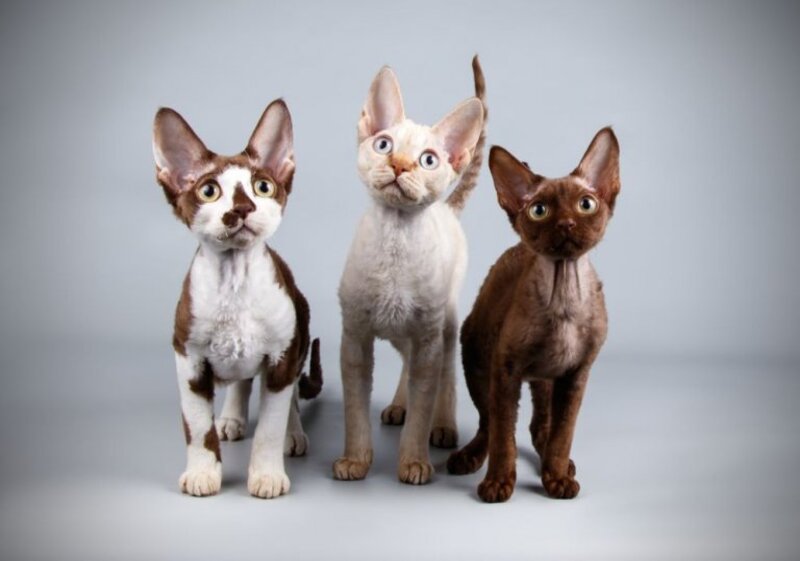
The Devon Rex cat is one of the most recognizable and beloved curly-coated cat breeds in the world. With its large bat-like ears, expressive eyes, unique waves of fur, and playful, affectionate personality, the Devon Rex has earned a loyal following among cat enthusiasts who appreciate a friendly, intelligent, and highly interactive companion. Originating in England in the late 1950s, the breed has maintained its quirky charm and unmistakable look for more than half a century. Today, the Devon Rex remains a rare but highly sought-after breed known for its elfin face, pixie-like personality, and people-oriented behavior.
If you’re searching for a curly-haired cat breed, a friendly indoor cat, or a low-shedding companion, this in-depth guide covers everything you need to know—from the Devon Rex’s history and appearance to grooming, nutrition, health, and whether this breed is right for you.
What Is a Devon Rex Cat?
The cat is often described as a mix between a cat, a dog, and a tiny monkey because of its unusual looks and incredibly social temperament. They are known for sticking close to their humans, following family members around the home, responding when spoken to, and settling comfortably on laps and shoulders. Their personality is that of a curious, energetic pet that thrives on attention.
They are not shy or independent like some other breeds. Instead, the Devon Rex cat actively seeks interaction, making it a perfect match for families, singles who work from home, or anyone looking for a playful feline companion.
Devon Rex Breed Overview
- Other Names: Pixie cat
- Personality Traits: Social, loving, active, playful
- Weight: 6–9 pounds
- Length: 10–12 inches
- Lifespan: 9–15 years
- Coat Type: Short, wavy, soft
- Coat Colors: Any color or pattern
- Hypoallergenic: Yes, to some extent
- Origin: Devon, England
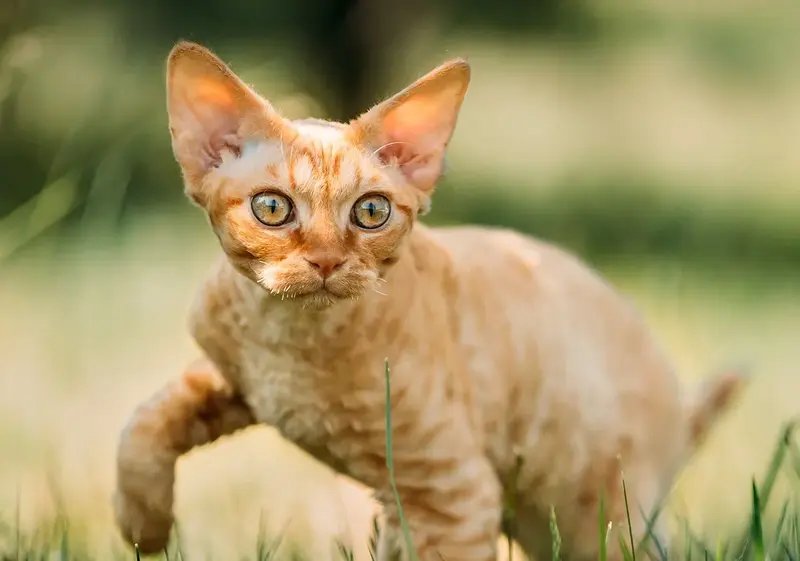
Devon Rex Cat Personality: What Makes This Breed Special
The cat is deeply affectionate, endlessly curious, and highly social. They want to be everywhere you areresting on your shoulder, climbing your back, jumping onto high shelves, or curling up under the covers. Breeders consistently mention that Devon Rex cats greet their owners at the door, follow them from room to room, and even vocalize in response to human speech.
Their high intelligence makes them excellent at learning tricks, playing fetch, and participating in games that keep them mentally stimulated. These cats also maintain their clownish, playful personalities well into adulthood, making them feel youthful even as they age.
If you’re looking for a cat with dog-like loyalty and endless charm, the Devon Rex personality is hard to beat.
History of the Devon Rex Cat Breed
Anyone researching the breed’s origins will find that the this cat was first discovered in 1959 in Devonshire, England. A woman named Beryl Cox found a curly-coated kitten born to a stray calico cat and named him Kirlee.
At first, breeders believed Kirlee carried the same genetic mutation as the Cornish Rex, another curly-fur breed discovered in Cornwall. However, breeding attempts revealed that Kirlee’s curl came from a completely different mutation. This led to the development of a separate, distinct breed—the Devon Rex, named after the region where it was first found.
By the early 1970s, major cat fancier associations recognized the Devon Rex as its own breed. Today it remains relatively rare, but it continues to grow in popularity due to its unique look and loving temperament.
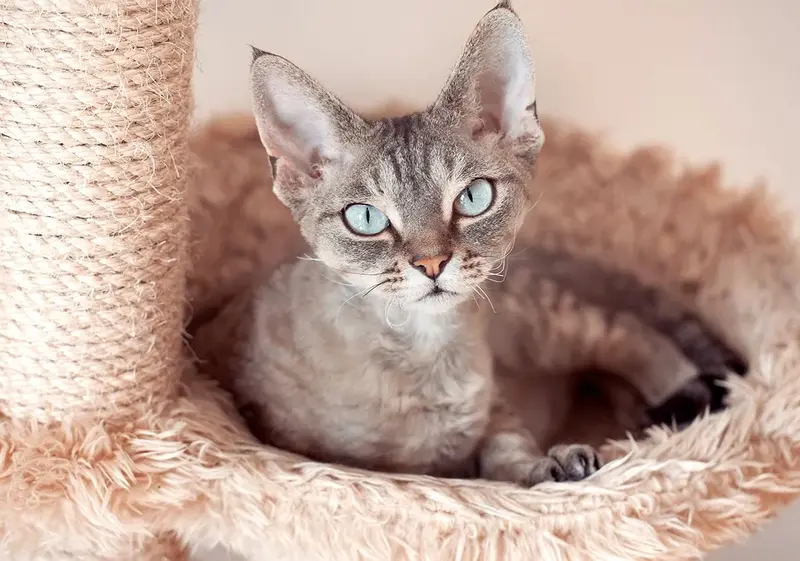
Appearance: How to Identify a Devon Rex
The Devon Rex is instantly recognizable thanks to several defining features:
1. Oversized Ears
Their large, low-set ears are one of the breed’s most striking traits, giving the Devon Rex its elf-like appearance.
2. Wavy, Curly Coat
Their coat is short, fine, and incredibly soft. Because they lack guard hairs, the fur forms waves or curls that feel velvety to the touch.
3. Big, Expressive Eyes
The breed’s wide-set eyes give a soulful, mischievous look.
4. Slender but Muscular Body
Devon Rex cats may appear delicate, but they are surprisingly strong and agile. Their long legs and light build make them excellent jumpers.
5. Variety of Colors and Patterns
They come in nearly every color and pattern imaginable, making them one of the most diverse curly-coated breeds.
Devon Rex Cat Care: Exercise and Activity Needs
To keep this cat happy, owners should provide:
- multiple cat trees and climbing areas
- puzzle toys and interactive games
- daily play sessions
- window perches for mental stimulation
- opportunities to learn tricks or play fetch
Because of their appearance and rarity, Devon Rex cats should be kept indoors only. Outdoor dangers, theft, and disease pose serious risks. To satisfy their desire for exploration, consider:
- a secure catio
- leash training with a harness
- supervised outdoor walks
- indoor obstacle courses
Their intelligence and energy mean they can get bored easily; when bored, they may become vocal or mischievous. Enrichment is essential to maintaining both mental and physical health.
Grooming a Devon Rex: What Owners Should Know
People often search “Do Devon Rex cats need baths?”
More than most breeds, the answer is yes.
Because they lack guard hairs, oils accumulate more quickly on their skin. Many Devon Rex cats need occasional baths to keep their coat clean and healthy. However, overbathing can dry the skin, so baths should be spaced appropriately.
Other grooming considerations include:
Ear Cleaning
The Devon Rex is prone to wax buildup due to the shape of the ears. Regular checks and gentle cleaning help prevent infections.
Shedding Level
These cats shed less than most breeds, making them popular among allergy sufferers. A damp cloth is often enough to remove loose fur.
Hypoallergenic Factors
While they are not fully hypoallergenic, many people with mild allergies report fewer reactions due to the breed’s low shedding and reduced Fel d1 protein production.
Nail Trimming
Regular trimming keeps both the cat and your furniture safe.
Health Issues Common in Devon Rex Cats
1. Hypertrophic Cardiomyopathy (HCM)
The most common heart disease in cats. Ethical breeders screen for this using echocardiograms.
2. Polycystic Kidney Disease (PKD)
A genetic condition that causes fluid-filled cysts in the kidneys. Responsible breeders conduct DNA testing.
3. Hip Dysplasia
Uncommon in most cats but observed in the breed. Can lead to mobility issues and arthritis.
4. Luxating Patella
A kneecap that moves out of place, causing discomfort or temporary lameness.
Regular vet checkups, early detection, and proper breeding practices can significantly reduce risks.
Diet and Nutrition for Devon Rex Cats
A high-quality, meat-based diet with balanced nutrients is ideal. Because they are active, they burn energy quickly, but they also love food—so controlled portions are important.
Feeding recommendations:
- Kittens: 3–4 small meals per day
- Adults: 2 meals per day
- Fresh water: Always available
Avoid abrupt diet changes to prevent digestive upset.
Where to Buy or Adopt a Devon Rex
Typical price range: $1,000–$3,000, depending on lineage, breeder standards, and region.
To ensure you are purchasing from a reputable breeder, look for those who:
- provide genetic testing for HCM and PKD
- allow visits or video calls
- offer transparency about bloodlines
- keep kittens until 12–14 weeks old
- prioritize health and temperament over profit
Avoid pet stores and backyard breeders, as they often fail to provide proper veterinary care or ethical breeding practices.
Is a Devon Rex the Right Cat for You?
The Devon Rex is a loving, intelligent, and joyful companion that thrives in interactive households. If you want a cat that behaves more like a tiny comedian who enjoys being part of everything you do, the cat is an excellent fit.
However, if you prefer an independent or low-maintenance cat, this breed may not be ideal. They crave attention, require enrichment, and can be sensitive to cold due to their thin coat.
